IHC – Integrated Bedside Technology

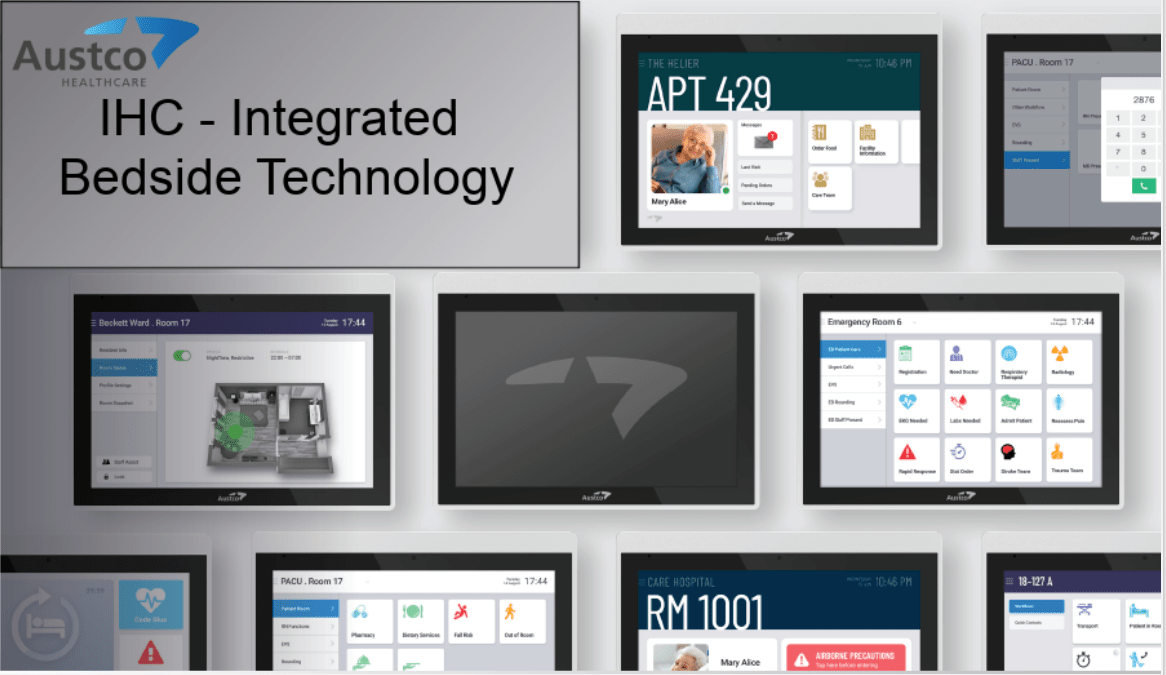
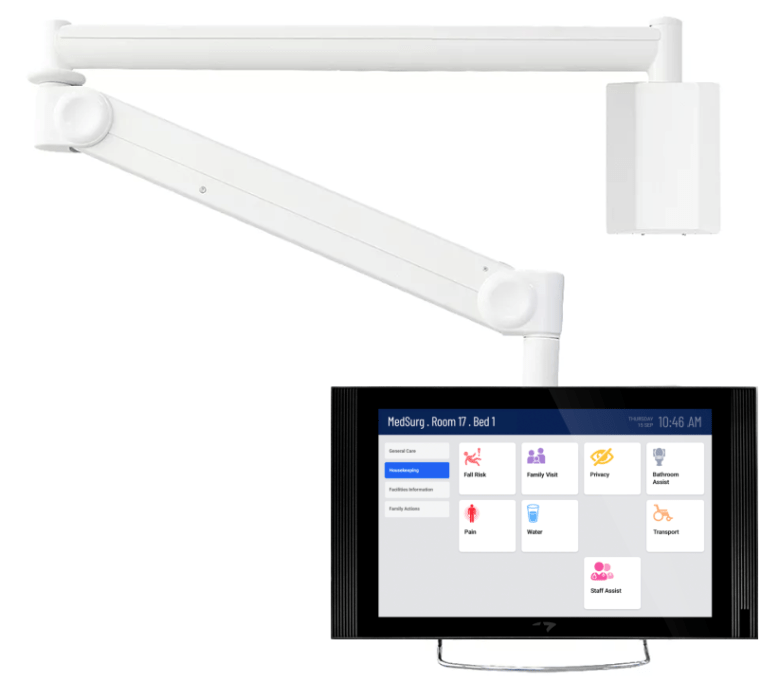
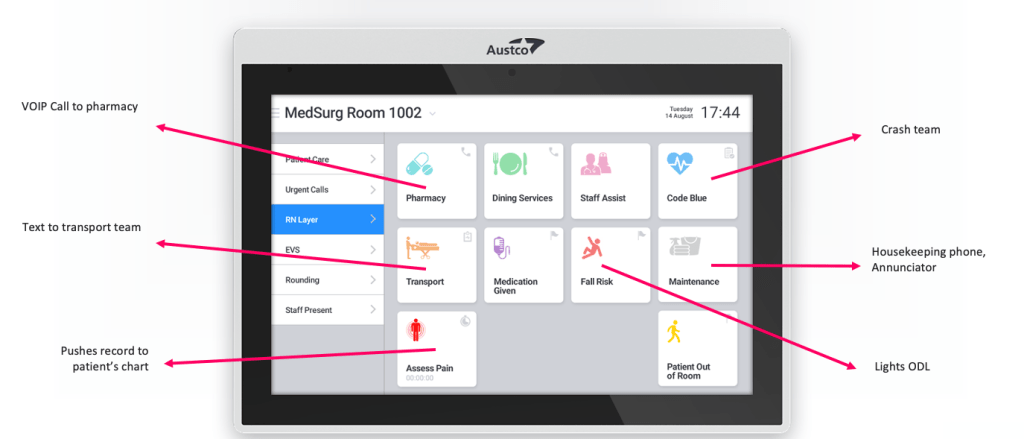
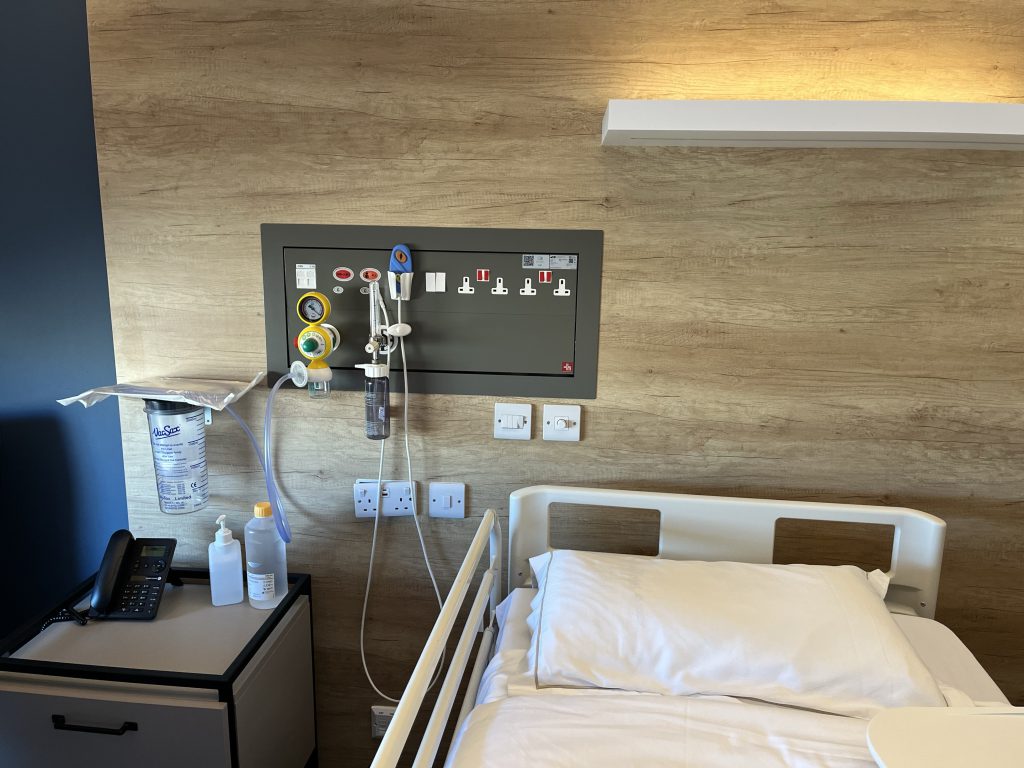
One of the Intelligent Hospital Capabilities is Integrated Bedside Technology, and we can provide this by use of our Application Station, which is a touchscreen device that can be mounted on an articulated arm.

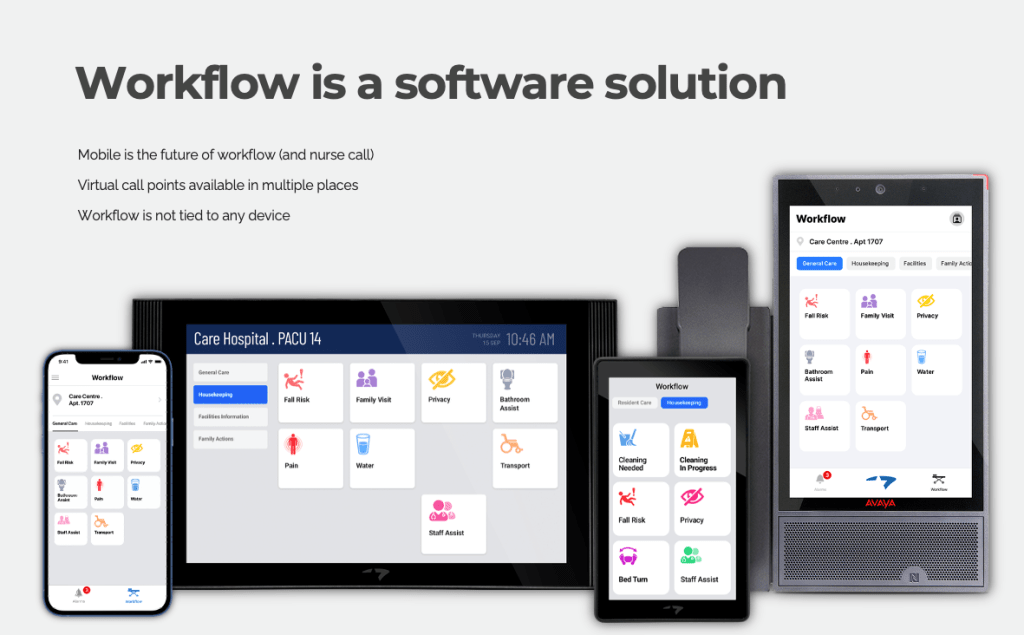
The device can have a number of separate screens / tabs for varied use, and one of those optional screens is the Workflow Screen. The workflow screen can have multiple tabs for different types of application use. Typically some tabs would be used for notifying staff of a requirement (nurse needed, food or drink required, or an issue in the room), but the programmable buttons can be used for a variety of use cases. 

One of the other available tabs can be used for Staff to access electronic patient records by connection to the EPR system.

Integration with Smart Building Systems – this can allow control of such things as lighting, window blinds and other devices connected to the BMS so giving them greater control at the touch of a virtual button.  Again this can avoid unnecessary call to a nurse for them to carry out such tasks, allowing nurses to carry out clinical tasks instead.

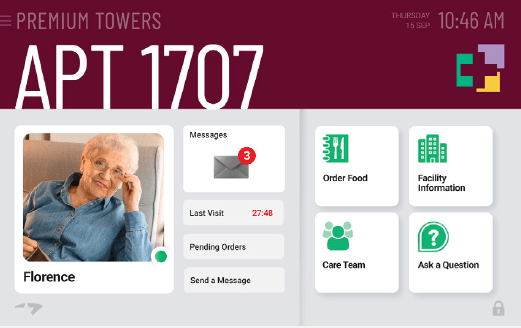
Patient information screen – If the Patient Boards are not to be deployed, there is still the option to have information from the EPR system displayed on the Application Station. This can help patients see information about their care which helps reduce the anxiety of what is going to happen and when.

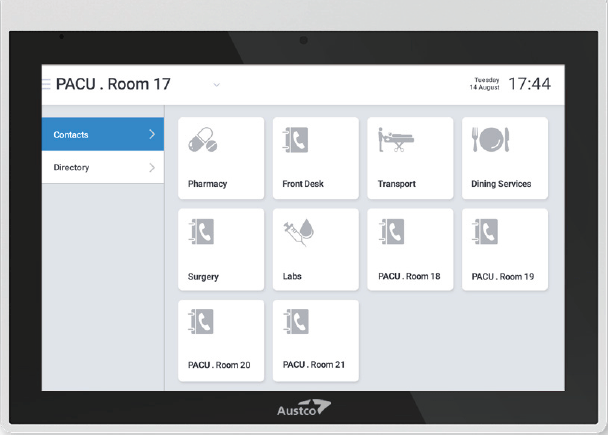
The device also has built-in audio for voice communication, and shortcuts buttons can be created for the most commonly required numbers. 

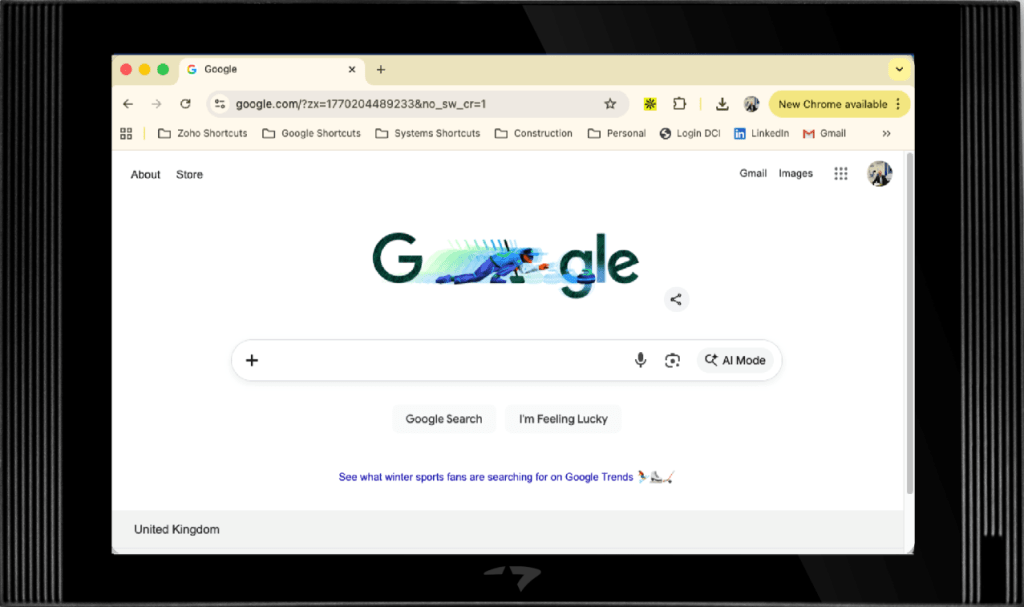
As it is an android device, TV remote Control Software can be installed, and therefore it can be used to control suitable TVs without the need for a separate remote control. It can also be used to access the internet.


All News and Events

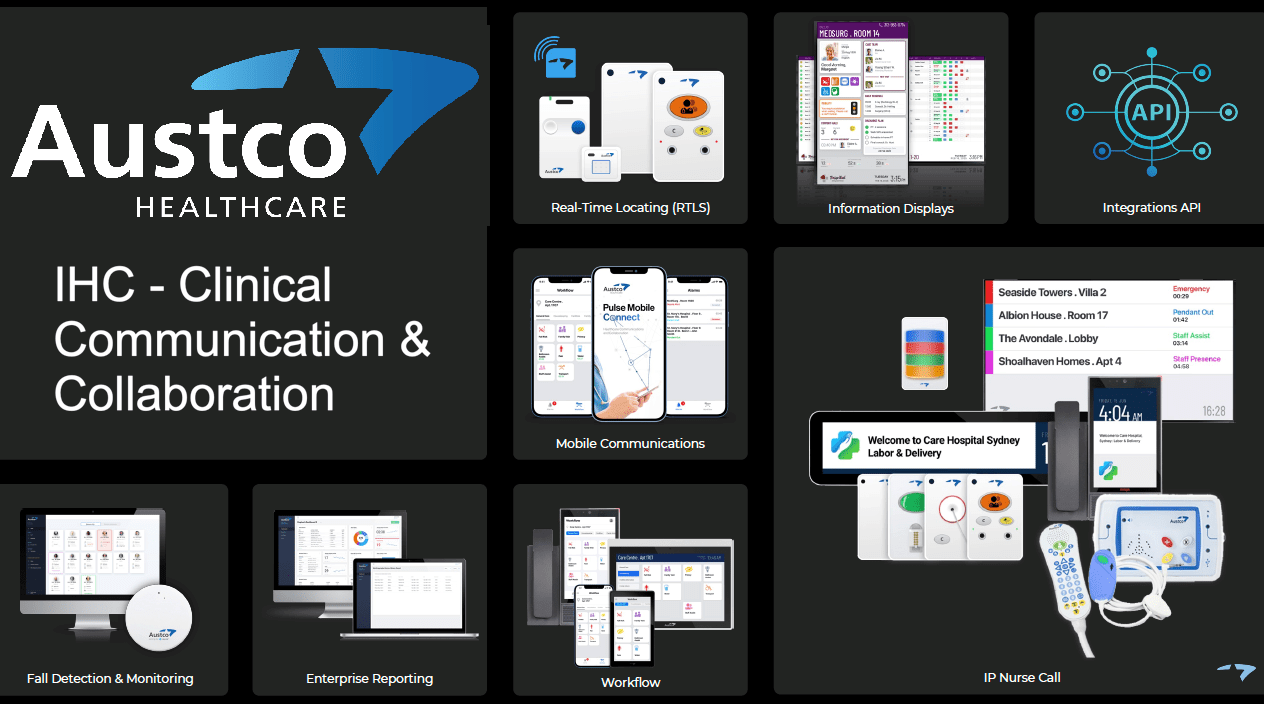
IHCs – Clinical Communication & Collaboration

Tacera is a Clinical Communication system. Its industry standard IP network architecture with open API for integrations, enmeshes with the hospital data infrastructure to leverage a fully integrated platform across the entire hospital.

Tacera includes various modules including IP Nurse Call with VOIP speech facility, Workflow, RTLS, Mobile Communication, Digital Signage and Enterprise Reporting. It has an open API to integrate with patient flow, scheduling, EPR systems, orchestration applications; telephony platforms; fire and building systems; staff duress; smart beds, pumps and telemetry equipment; asset tracking and IOT devices.  Smartphone and tablet capability is by means of native iOS and Android apps.

Tacera is an adaptable and scalable solution delivering significant benefits  including:

  • Providing the right information to the right person in the right place at the right time e.g. context rich information including up-to-date patient data.

  •   Patient Safety and Quality – Patients can send alerts and requests directly to individual, department or clinical team using Touchpoints, Mobile devices or from their pendant handset.
  •  Patient Flow – Use of the workflow system provides faster patient admissions, treatment, transfer and discharge, as well as allowing staff to focus on care rather than spending time on the phone waiting for answers from portering, housekeeping, and pharmacy.

  • Team productivity/Collaboration – Increasing staff productivity through collaboration using workflow or IP voice communication.
  •  Patient Activation and Experience – Nurses can speak to patients before walking to them and can receive specific requests for drinks etc., directly to their handsets. 

  • Patient experience – Patients feel more engaged through use of the system, and get more prompt responses from staff.
  • Staffing and Experience – Detailed, context-rich, and up-to-date patient data and statuses are always available to nurses via integration with the EMR / EPR system and displayed at the bedside and / or outside the room. Clearer information and less time spent on phones waiting for someone to answer also contributes positively to staff wellbeing. Resolving alarm fatigue for staff.

  • Reducing cost –  Reduced staff costs as the need for additional staff for single-occupancy rooms is mitigated by the use of this communication platform.
  • Continuous Improvement – Using Tacera can improve the punctuality and quality of clinical decision-making, resulting in better outcomes.

Austco Tacera CC&C solutions are installed in hospitals throughout the UK and in over 50 countries around the world.  

All News and Events

Intelligent Hospital Capabilities (IHCs) – Digital Signage

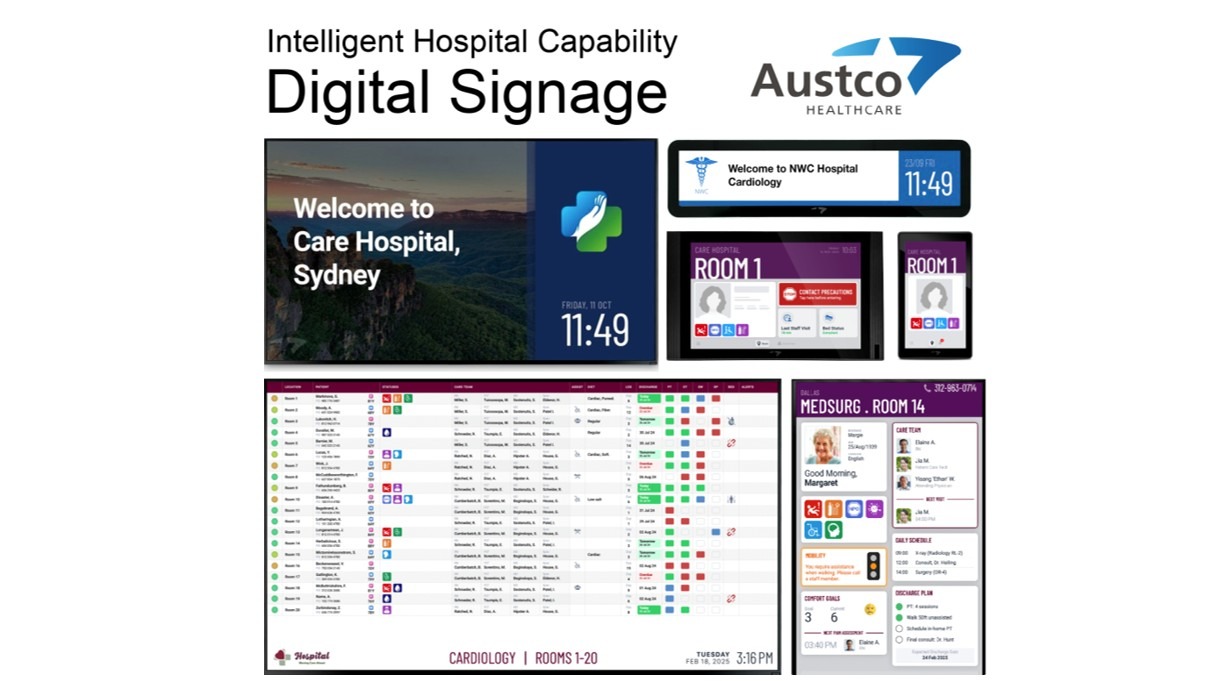
As part of our Tacera system, we have a number of options for digital signage.

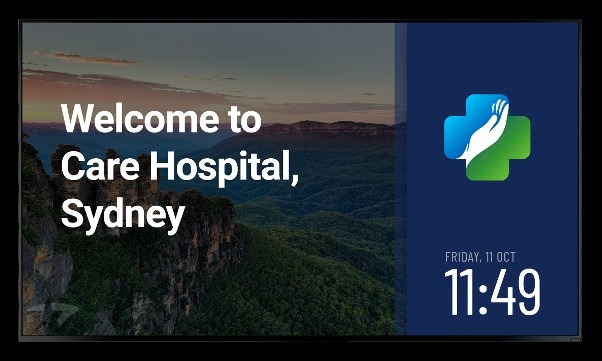
Large Screen Display Driver – This is a device that connects via HDMI to any standard TV (1080p or above) to display Scrolling images (such as notices, banners, posters etc) and videos, but upon the activation of an alarm or notification it becomes an annunciator. The screen switches back to its previous screen when the alarm notification is cleared.

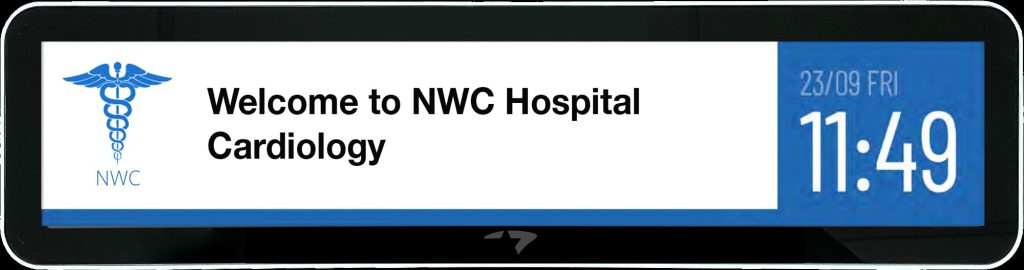
Corridor Display – These customisable displays can be used to help with digital wayfinding by displaying the name of the area / ward, but turn into an annunciator upon activation of an alarm / notification.

The benefits of these displays includes Improved wayfinding – this will help staff (particularly new or agency staff) to understand where they are when navigating multiple corridors. This will also help the general public for the same reasons. From a staff point of view this can help improve efficiency.


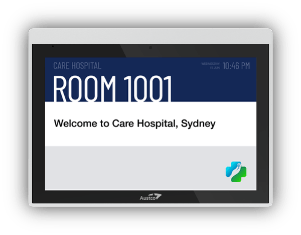
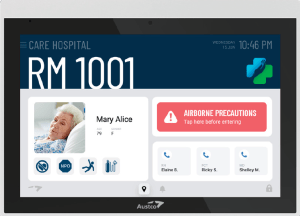
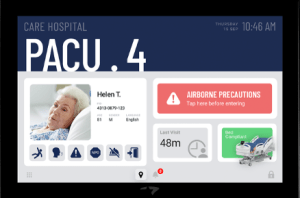
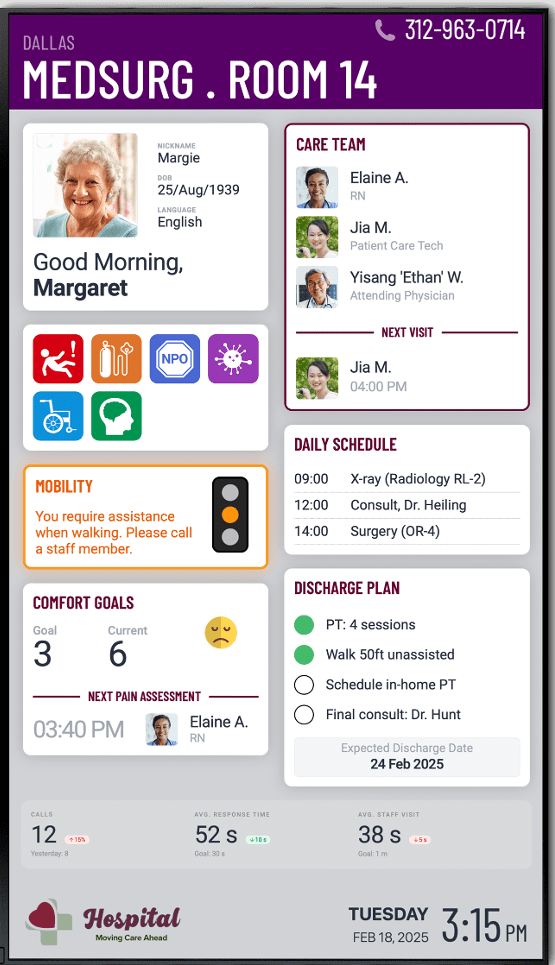
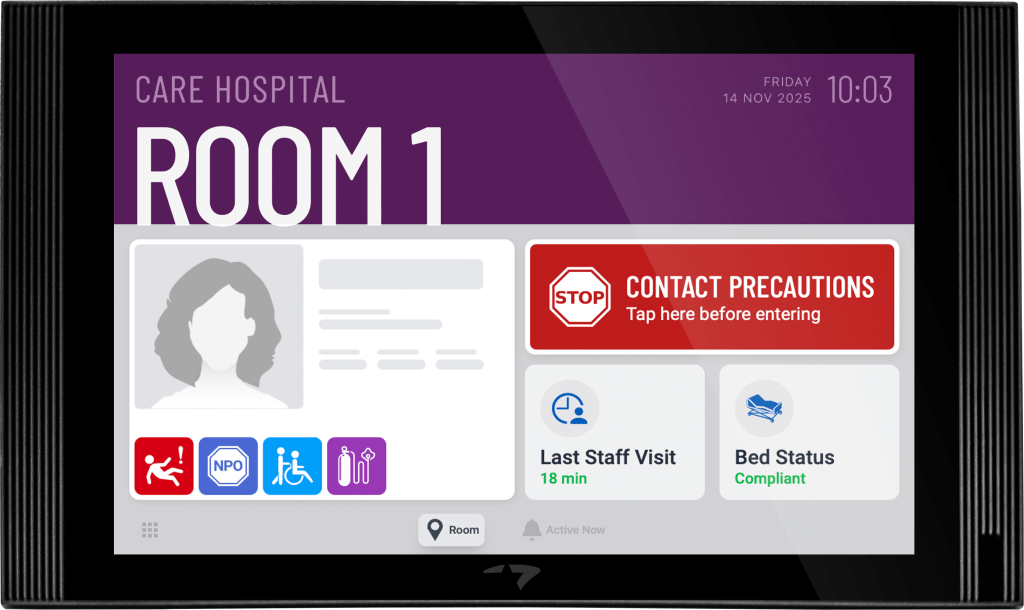
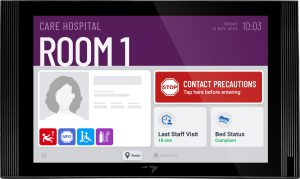
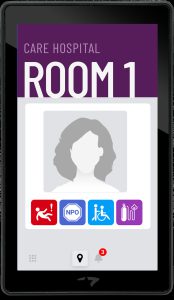
Room information Screen / application station – This customisable display can be used for a number of uses including room / patient information. The information displayed here is entirely customisable and would typically be located outside a patient room. Information can be pulled from other systems such as EMR / EPR systems but also ADT systems.

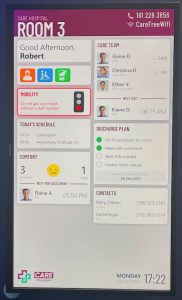
Patient Board – This screen would typically be located at the bedside in place of the white board. It can be customised to provide whatever information needed from either the Tacera system or connected systems (such as EMR / EPR). The information can be for staff use but also for patient use keeping them informed of what is happening with their care.


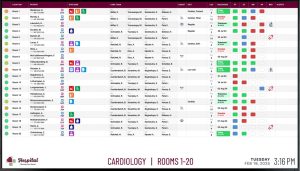
Census Board – This is typically found at the nurse base and gives an overview of information about patients in a given area / ward. Information can be pulled from EMR / EPR, Bed Management, ADT systems etc as well as showing information from the Tacera system.


The benefits of various digital information screens include:

  • Improved staff efficiency – Having patient information readily to hand will help clinical staff to identify the patient, understand information about their care to date and planned, but also cut down on the need to log into the EMR / EPR system each time they want some of this information. It also avoids the need to write information on a whiteboard, as this would be pulled from EMR / EPR directly. Utilising the room information screen outside a room will also improve efficiency as there would be no need to enter a room just to understand who is in it.
  • Improved patient care – Having information directly to hand about the patient and their care plan, helps to keep staff informed so the right care is delivered at the right time. Notifications can be also generated based on timers to assist with regular tasks to ensure they happen in a timely fashion.
  • Improved staff wellbeing – Information displayed on the Room Information Screen outside the room about the patient’s state (e.g COVID patient) could help to take necessary precautions before entering the room. Also having information to hand at the Patient Board next to the bed would avoid the need to log into a COW to gather information about the patient and their care.
All News and Events

Austco Exhibiting at Healthcare Estates 2025

Austco will be exhibiting at Healthcare Estates 2025 on 21st and 22nd October at Booth H13.

This year we will be covering a number of subjects and in particular looking at benefits for various clients. Below we cover of some of these benefits.

Prevention is better than Cure

In the online world we live in today, many clients have concerns over Cyber Security, and particularly when adding new systems to their networks. With SMA from Austco, our software is regularly updated to combat cyber threats, so providing confidence to IT teams that our systems are safe to deploy, and will always be reviewed to account for the latest cyber threats.

Digital Transformation of Clinical Workflows in Hospitals

Until recently, nurse call was a simple button to summon help in the event of patient distress, no better than a fire alarm. But with the advent of IP technology, nurse call has evolved from simple build­ing system to IT data system, a true healthcare communications platform with capabilities well beyond buttons and lights. Because nurse call touches other clin­ical data systems, it is in a unique position to leverage communica­tion workflows.

Digital Transformation of Clinical Workflow

Nurse call has come a long way from a “call bell” system.  Today it’s communications plus situational awareness.  Care communications platforms now bring context-dependent information to touchscreens and other displays including mobile devices.  Digitising workflows is not rocket science, or perhaps more aptly brain surgery, we’re talking about using technology to do the work of raising calls and alerts, communicating with all relevant departments, making data visible that was previously hidden elsewhere in applications.  Where well-planned and implemented, care communication workflows effectively resolve technology and organisational silos, drive direct communications and silent annunciations, identify bottlenecks and combat alarm fatigue.  Giving nurses more time to care, giving patients better experiences.

The above excerpt is taken from Austco’s White Paper Digital Transformation of Clinical Workflows in Hospitals https://www.austco.com/white-paper-digital-transformation-of-clinical-workflows-in-hospitals/

Digital Transformation of other Workflows

We don’t have to stop at reviewing and digitising workflows for Clinical staff, we can utilise the systems in place to work for operational teams too. Because Austco’s Workflow feature is so flexible, it can be programmed to deal with a wide variety of workflows for varying departments utilising digital end points and / or integrations to provide inputs or outputs. At Healthcare Estates this year we will be showing some examples of how this can work, but will also be looking to take on new examples from visitor’s feedback.

Better Visibility

In the busy world of Acute Hospitals, it is important to be able to clearly see when a notification, call or ultimately an emergency is active, and where the source of that call is. Austco’s latest screens are LCD and are therefore clear, and can show more information that the traditional displays. They can also be customised to show location information when calls are not active.  Specific call types can be programmed to clearly show different types of calls, and notifications.
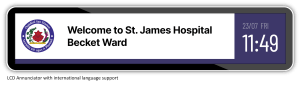
This year at Healthcare Estates, we will be showing something very different to compliment the clarity of screens and use of follow-the-lights, in order to make it even more clear that a certain call type is active (especially Emergency or Cardiac). Come along to our stand to see this in action.

Joined Up Systems

With more and more data being held in disperse systems, it can be very useful to link systems together, both to avoid duplication of input, but also to bring greater benefit. At Austco we have been integrating with other systems for many years, and at our stand this year we will be able to demonstrate some examples of integrations that can benefit Hospital staff.

To see our innovations in action, come and visit Booth H13. To register for the event click here

To have a pre-booked demonstration at the event, please click here and choose “System Demonstration at Healthcare Estates” to then see the available slots.

All News and Events

Austco at European Healthcare Design 2025

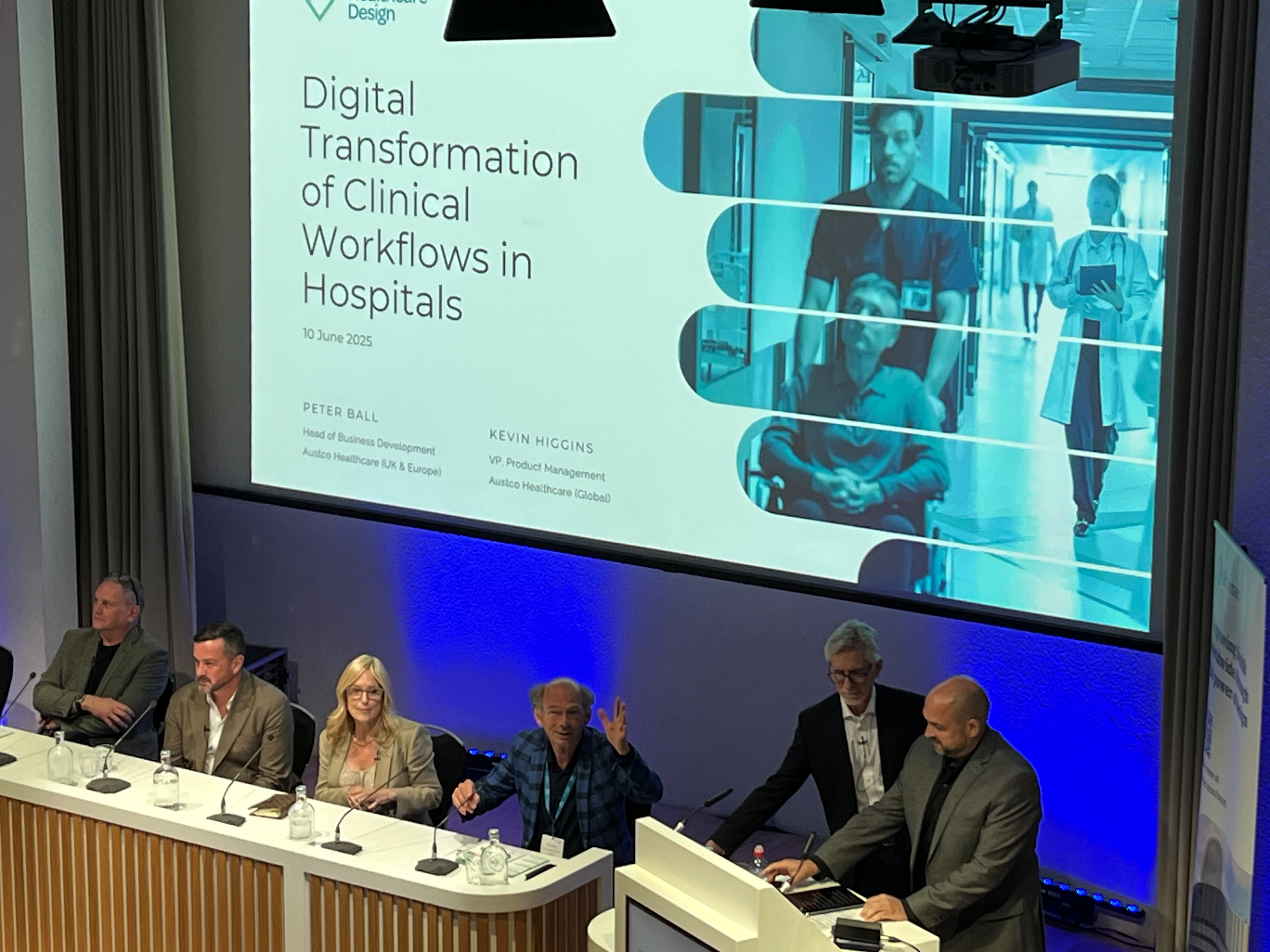
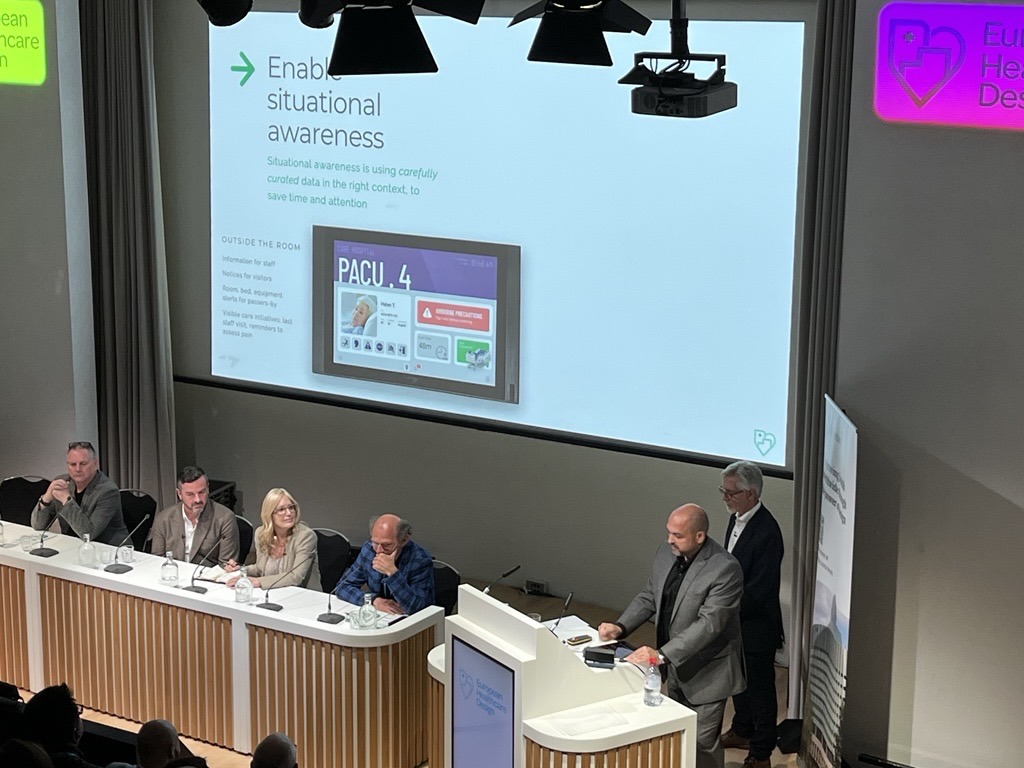
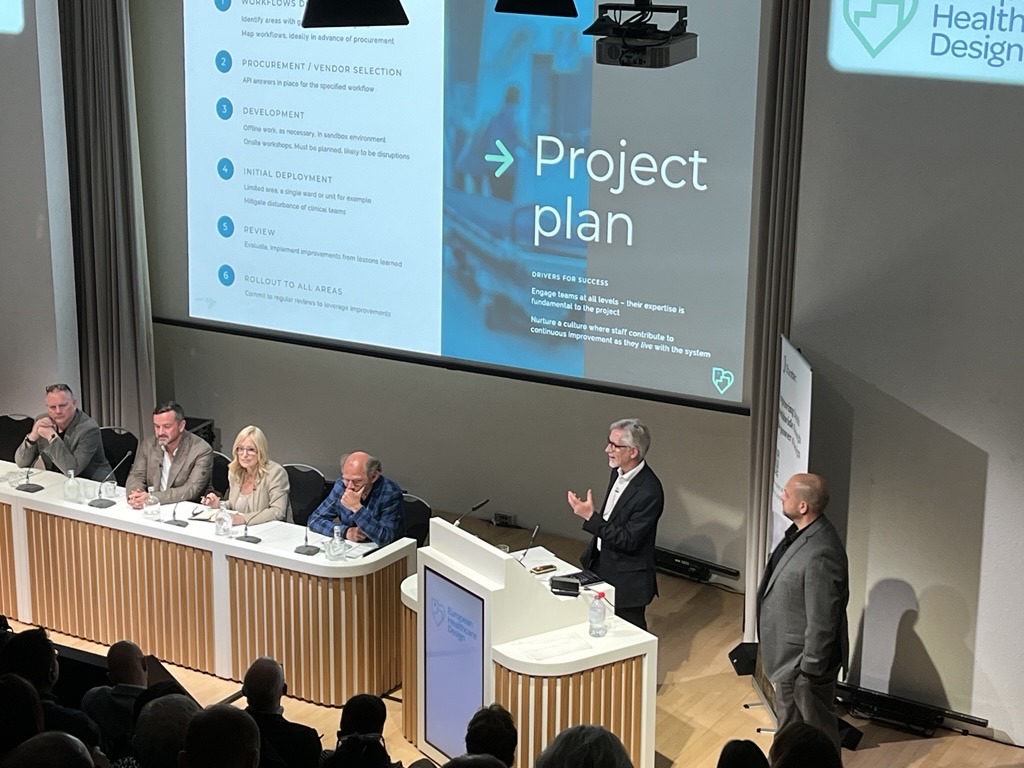
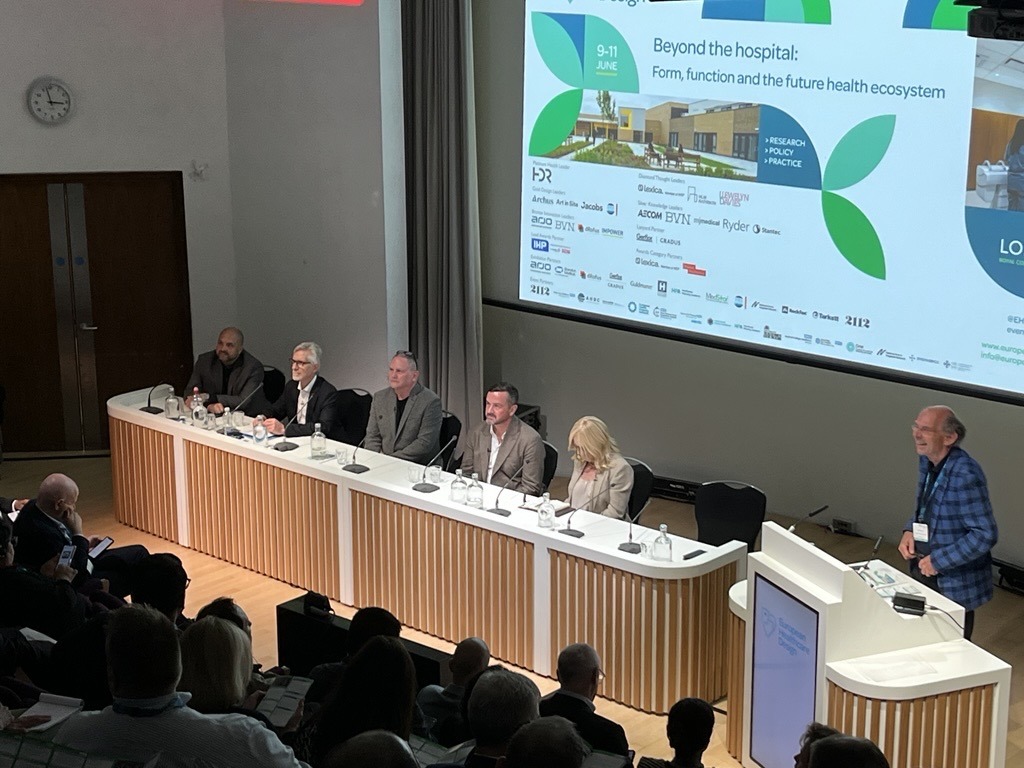
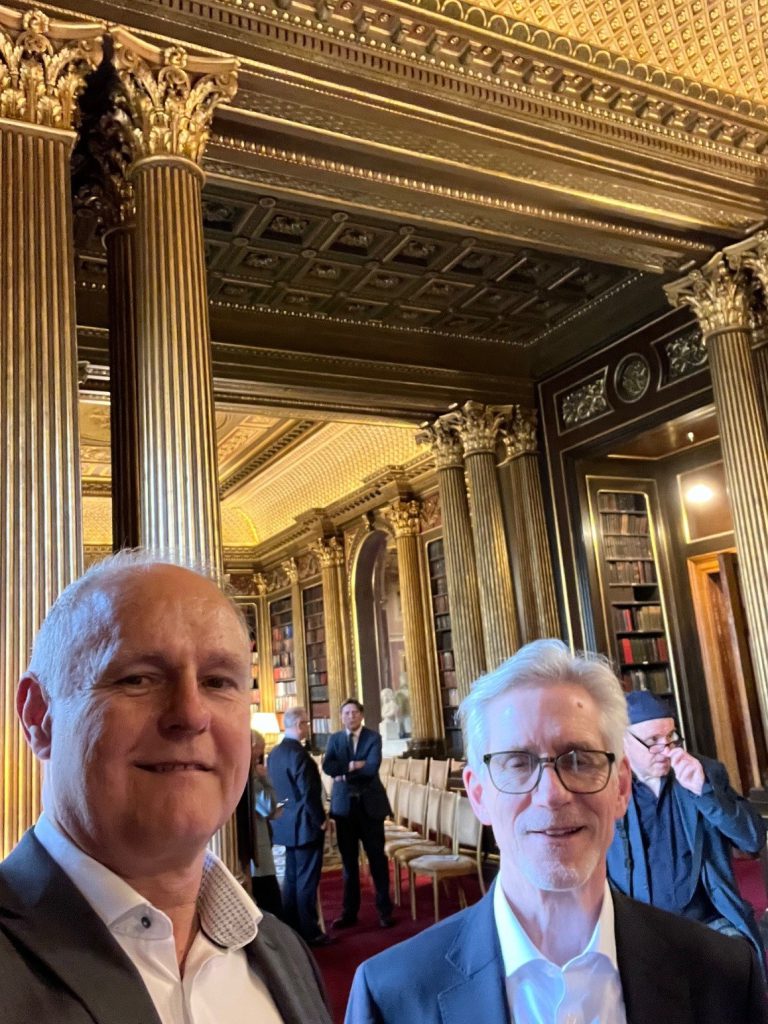
Austco attended and presented at European Healthcare Design 2025 this week at the Royal College of Physicians in London.

We presented on the 2nd day amidst other presentations around Digitisation, Workflow and Technology. We were joined by other great presenters from around the globe which made for a very interesting and thought-provoking few days.

Kevin Higgins and Peter Ball presented for us on “Digital Transformation of Clinical Workflow in Hospitals” While it was a little “Jeeves and Wooster” at times, it was certainly entertaining and seemed to grab the attention of the audience.

Transforming workflows through the use of digital technology can certainly help bring efficiencies, but can also help to improve patient care and improve the wellbeing of staff. We are getting more and more interest in this area and continue to introduce new and improved features around digital workflow. @Kevin Higgins finished off the session by giving a brief glimpse into the future and what technologies are likely to be coming along to help in this area. Some of these will be here sooner than some may think!”


All News and Events

Austco invited to European Healthcare Design Panel Debate

We were delighted and privileged to be invited to attend the European Healthcare Design Panel Debate in London last night. We enjoyed listening to some inspirational speakers, and there were some very interesting points raised around the UK health system, and potential solutions to problems, and certainly food for thought.  Our technology will be able to help to deal with some of the issues and we are looking forward to presenting at the EHD event in June.

All News and Events

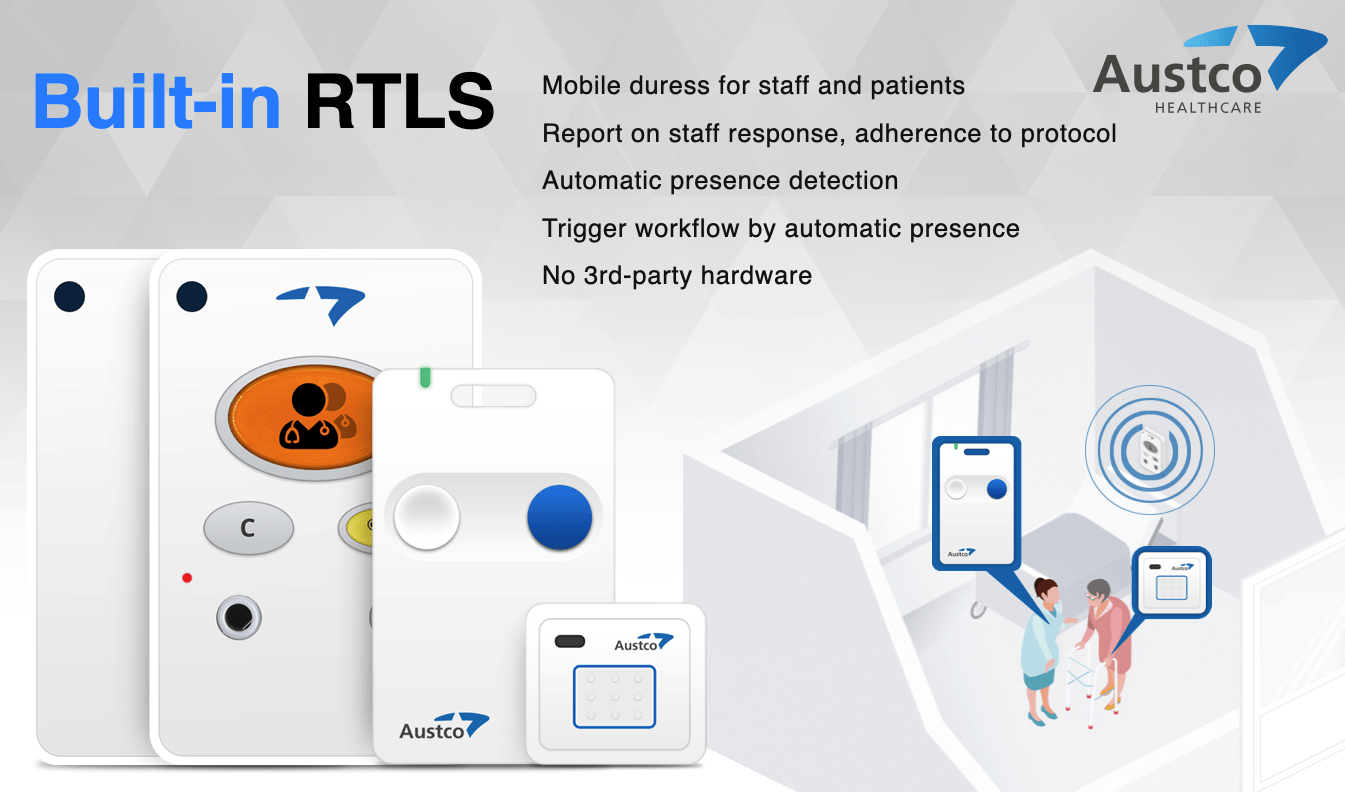
Nurse Call With Built-In RTLS

Austco’s 4th generation Tacera hardware, when deployed throughout a building, creates a network of sensors. Staff, and residents or patients carry a small, battery-powered badge that automatically interacts with these sensors to report their location. These badges are rechargeable.  With each interaction of badge and sensor, data is sent to the RTLS server, and Tacera records the badge location and time. Having RTLS built-in to Tacera avoids the cost of additional 3rd party hardware. This gives several other advantages too:

Mobile Duress

Ideal for staff safety in Emergency Departments and throughout hospital wards. The badges have programmable buttons, and users can use them to call for help, wherever they are within the facility. When pressed, the location displayed in the nurse call system will be that badge’s current location and the type of alarm programmed for that button. With the two-button badge, the second button can either be programmed to cancel the alarm raised by the first button, or to raise a different type of alarm.

Reporting

All location and button press data is stored for reporting, including who the badge was assigned to, room visits, response times, and time spent in rooms. With this information, healthcare organisations can access complete audit reports, better monitor how care is delivered, and identify opportunities to improve.

Automatic Staff Presence

With dual-technology RTLS, the badges and call points interact wirelessly to record a presence event in a location. Staff no longer need to press a physical presence button and staff presence is displayed on workstations, mobile devices, and other interfaces within the system. The presence events can optionally initiate other processes, and all events are logged for reporting.

Automated Workflow

Many processes can be initiated with auto-presence and below is a small selection of examples:

  • Send messages
  • Place audio calls
  • Automatically log completed rounds
  • Move a bed workflow from current stage to the next and send a message to the staff responsible for the next stage
  • Mute the sounders
  • Display role-specific content on in-room screens and / or mobile devices

The product is constantly being developed to add to these features wherever we can provide additional benefit to our customers.

All News and Events
Austco visiting Malta

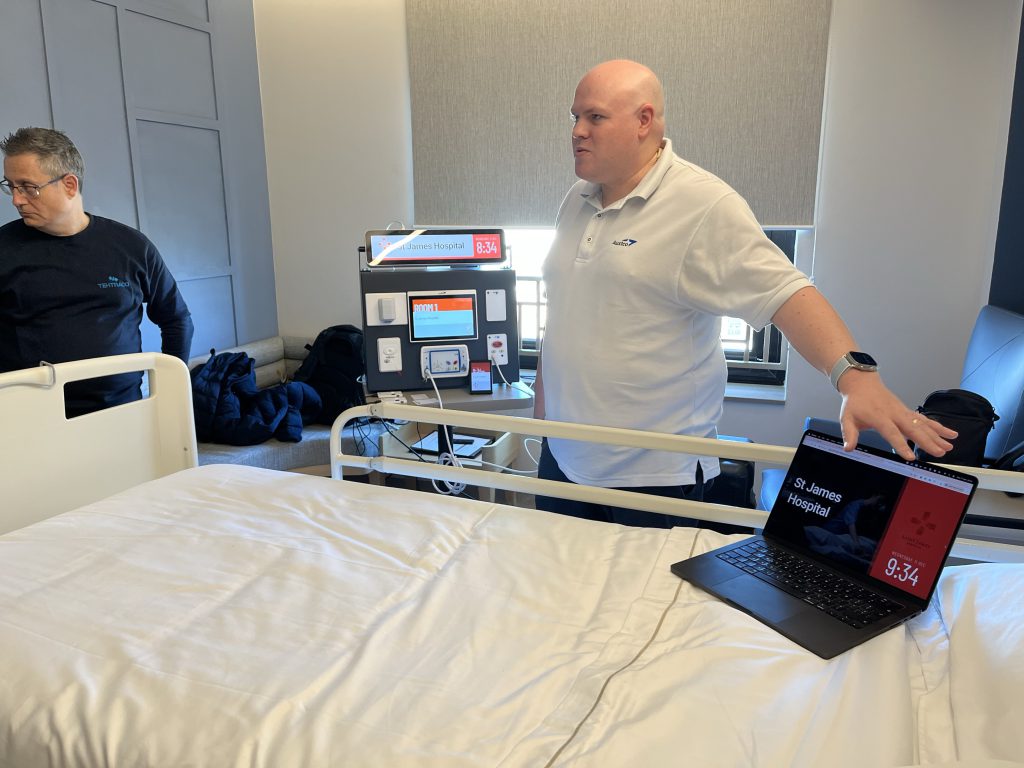
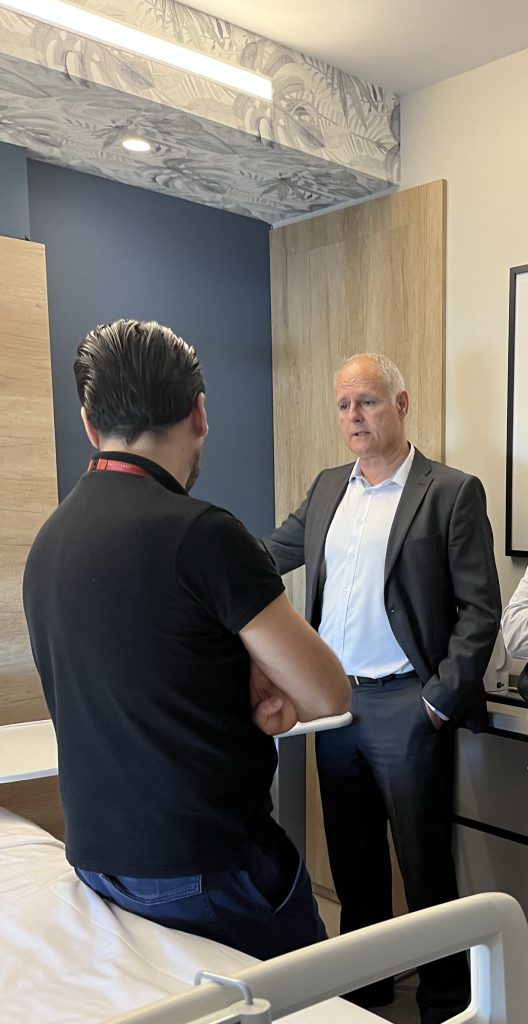
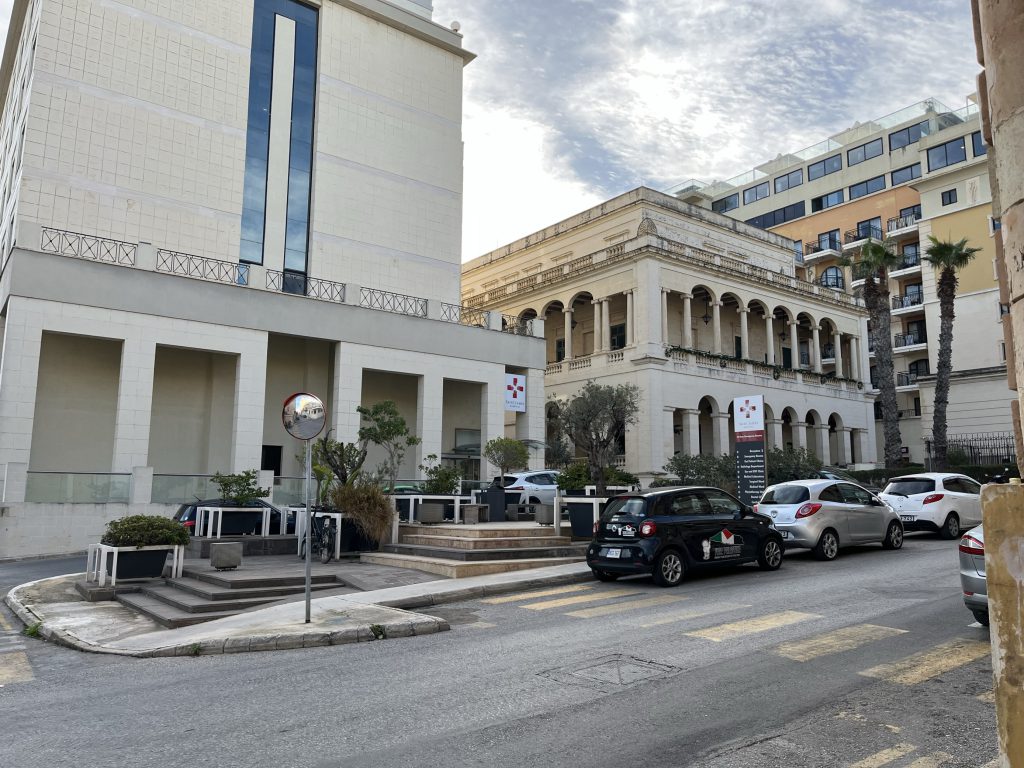
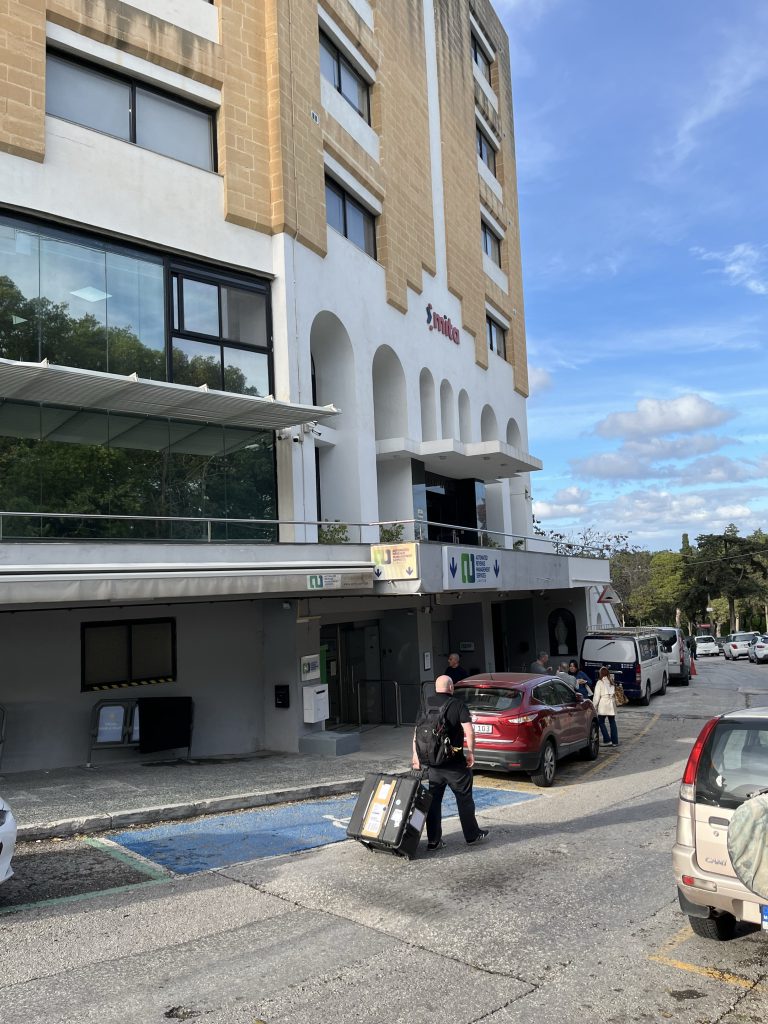
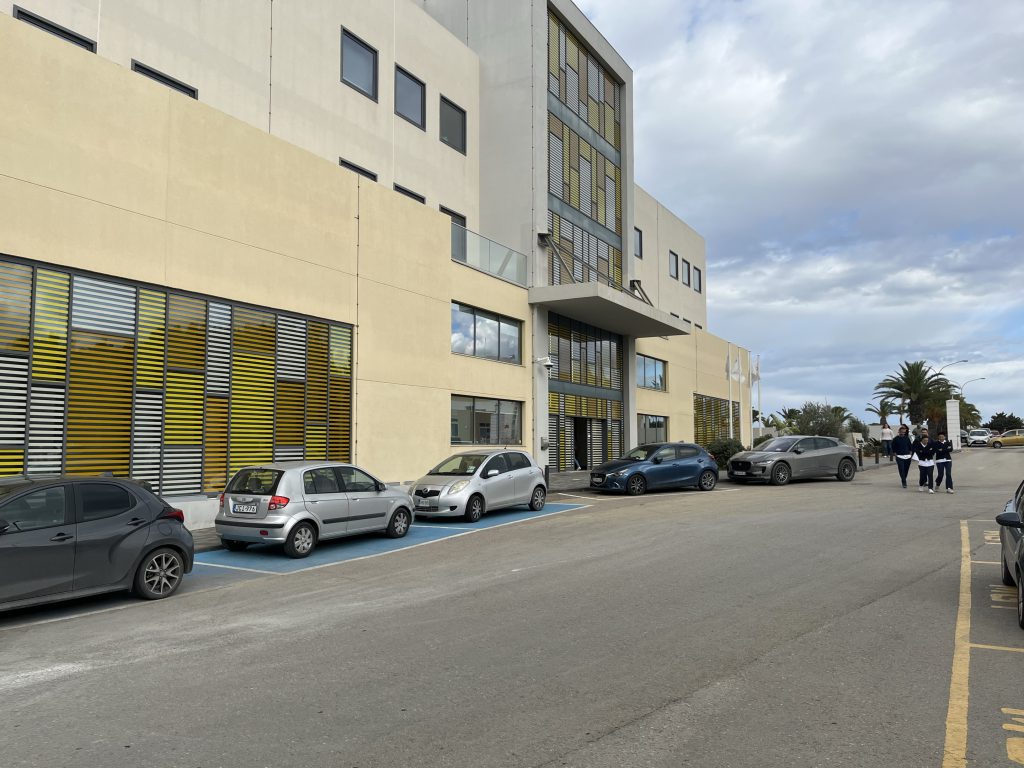
Austco representatives were in Malta recently to support our local Partner Tektraco.   We enjoyed meeting our customers at several healthcare sites and organisations where we gave presentations and demonstrations of our latest Tacera IP Nurse Call and System.  Our meetings went very well and comments like “this is far more than just a Nurse Call System” were great to hear! 

Workflow, Mobile and RTLS were particular features that resonated well and we are looking forward to talking to our customers more about these solutions.

This was just one of a series of ongoing visits to support each of our Partners across Europe, meeting customers to learn about the challenges they face in managing their hospitals and to explain what our systems can do to help them

We would like to thank Tektraco for their kind hospitality during our visit and also for arranging the presentations.

All News and Events
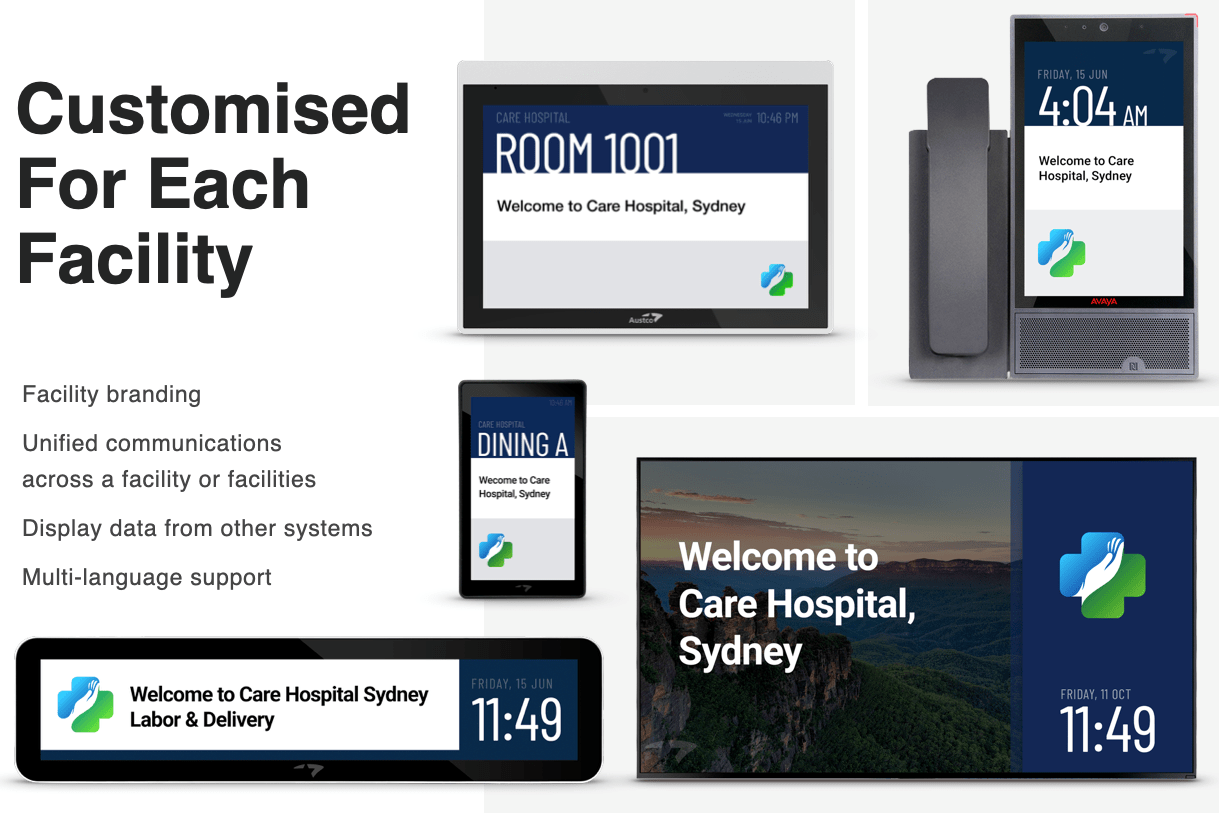
Customisable Displays from Austco

Many Nurse Call screens in Hospital settings tend to limit themselves to displaying basic alarm information and sometimes the time, and don’t really accommodate any additional information.

Given that we install screens of various types across facilities, Austco believe in working with our clients to understand what information would be useful to display on these screens when there are no alarms present.

Branding was a common theme in feedback and so we have been able to customise colour schemes on the displays, as well as displaying logos and Site (or Trust) name.

Location information was also important, and so this can be set per screen, and in corridors can help with navigating the various corridors of a hospital facility.

Screens having a unified appearance was also popular, so it is easy to identify a Nurse Call screen from other screens around a facility, and to have a layout that is familiar regardless of which screen you are looking at.

As we are a global company, multi-lingual support was very important, and the ability to display unique characters for many languages was a feature we needed to allow for, and our LCD screens enable this.

All News and Events
Healthcare Communications and Collaboration App
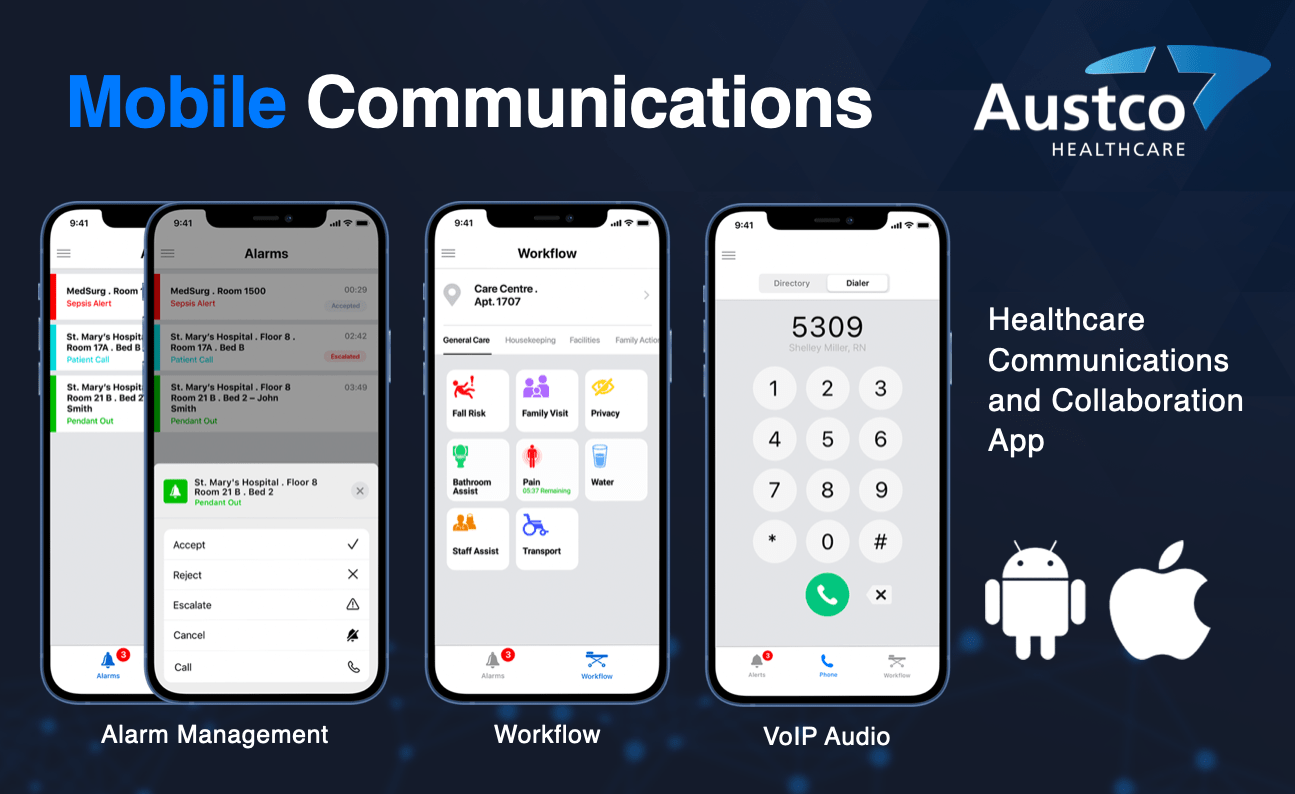
Austco’s mobile app is free to download and can work on Android or IOS phones. It offers the below functionality through an easy to use interface:

Alarm Management

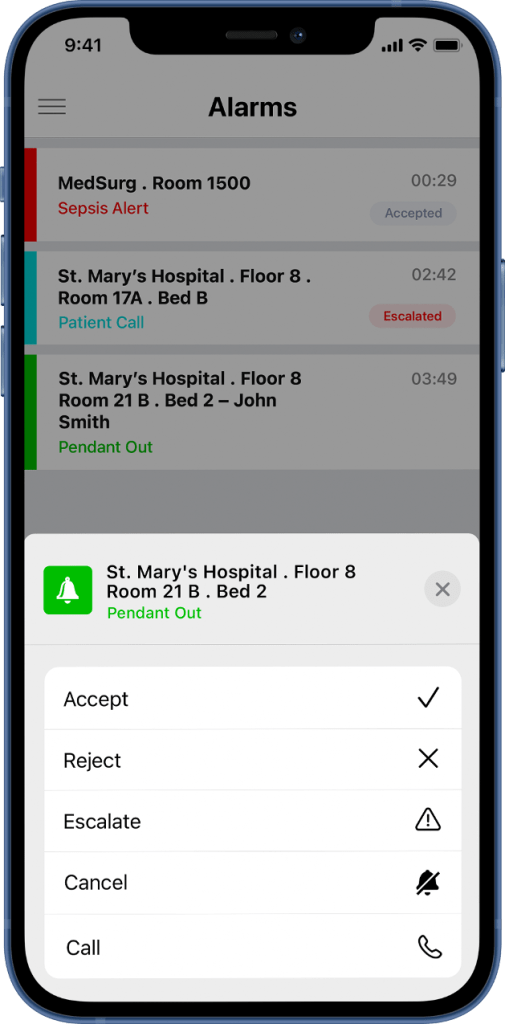
Alarms are raised on the Nurse Call system in the usual way, but as well as the alarms appearing on various screens, Nurses can also receive alarms from only patients/locations assigned to them. Alarms will display in the same priority order as in the nurse call system.

Staff always know which alarms need attention and can take several actions with each alarm: VOIP callback, Accept, Reject and Escalate. If accepted, this shows on other Nurses’ devices, so they know they don’t need to attend. With VOIP callback, Nurses can establish the priority of the call by talking to the patient, and can prioritise other tasks based on that conversation.

Mobile Workflow

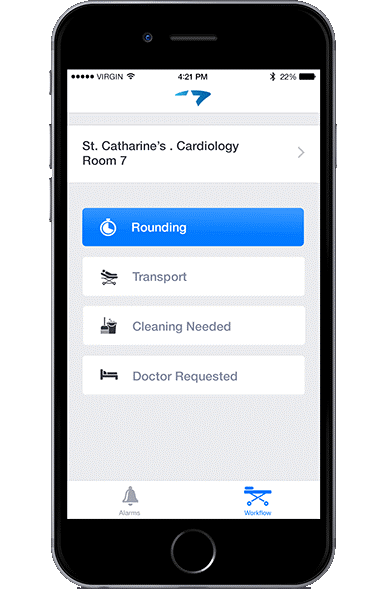
Calls can be raised from the mobile app via the workflow tab, and these can form a workflow.  A Nurse may want to raise a call for transport to move a patient, and that call will go through to the Porter team. They may then want to raise a call for the cleaning team to clean the area before either the patient returns, or a new patient is moved into the bed / room. When the cleaning team arrive they may want to let everyone know that cleaning is in progress, so no-one enters the room / area. Once finished they will want to notify all concerned that the bed / room in that location is ready. All of this can be done via workflow and can be done on the mobile app.

Reminder calls can also be set using the mobile app for such things as rounding, medication, patient turning etc.

VoIP Audio

As well as being able to callback to a patient call, VoIP calls can be raised from the mobile app.

If you would like to find out more, or to book a demonstration, please click here

All News and Events